
Meta-Beschreibung: Compare 48V, 60V, and 72V e-bike systems. Learn the differences in speed, power, range, cost, and controller compatibility to choose the best voltage for your project.
Einführung
Quick Answer:
8V is best for commuting.
60V offers the best balance of power and efficiency.
72V is best for maximum performance and heavy-duty use.
The choice between 48V, 60V, and 72V systems depends on your power requirements, budget, and riding style. Higher voltage generally provides greater acceleration, higher top speed, and improved hill-climbing performance, but it also increases system cost and complexity.
Most urban commuters find that 48V systems offer the best balance of affordability and practicality. Riders looking for stronger performance often choose 60V systems, while 72V setups are commonly used in high-performance and heavy-duty applications.
Understanding voltage selection requires balancing several factors, including motor compatibility, battery cost, controller specifications, riding conditions, and local regulations. The ideal choice depends on how and where you ride, as well as your long-term upgrade plans.
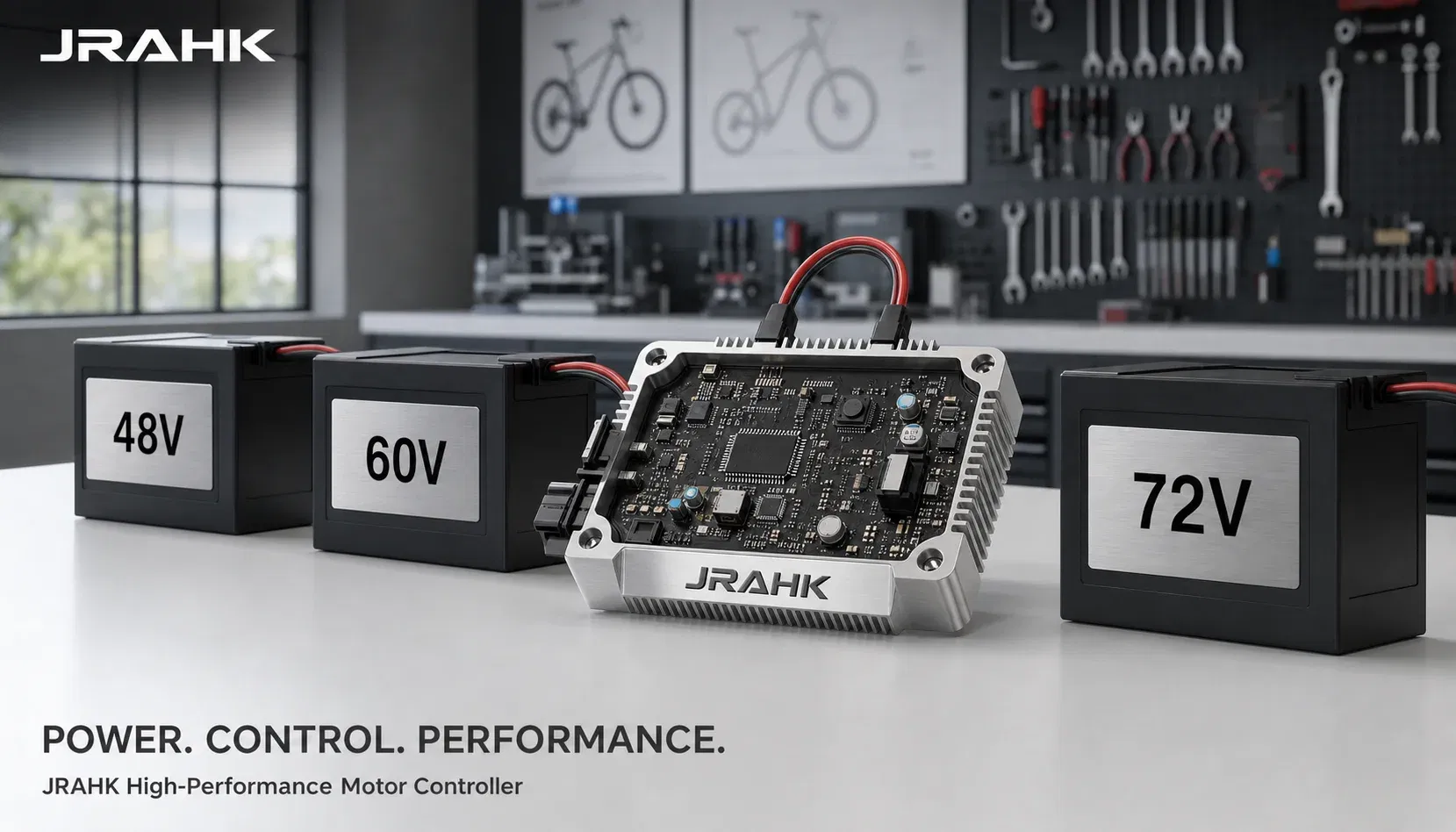
A comparison of three high-end electric bike battery systems resting on a minimalist technical workbench.
Voltage System Comparison Overview
Leistung und Leistungsmerkmale
| Voltage System | Typical Power Range | Speed Capability | Drehmoment Leistung | Efficiency Range |
|---|---|---|---|---|
| 48V | 500-1500W | 25-35 km/h | Gut | 88-94% |
| 60V | 750-2000W | 30-45 km/h | Better | 90-95% |
| 72V | 1000-3000W | 35-55 km/h | Ausgezeichnet | 91-96% |
Cost Analysis Breakdown
48V System Costs:
- Battery: $300-600 for quality pack
- Controller: $150-300 for advanced features
- Motor: $200-400 for suitable power rating
- Total system: $650-1300
60V System Costs:
- Battery: $400-800 for equivalent capacity
- Controller: $200-400 for higher power handling
- Motor: $250-500 for increased power rating
- Total system: $850-1700
72V System Costs:
- Battery: $500-1000 for performance pack
- Controller: $300-600 for high-power capability
- Motor: $300-600 for high-performance rating
- Total system: $1100-2200
48V Systems: The Practical Choice
Ideal Applications
48V systems excel in these scenarios:
Städtischer Pendelverkehr: Perfect for city speeds and stop-and-go traffic Budgetbewusste Bauten: Lower component costs and wider availability Legal Compliance: Easily stays within speed regulations First-Time Builders: Simpler system with forgiving characteristics
48V Performance Characteristics
Geschwindigkeitsbereich: 25-35 km/h typical top speed Hill Climbing: Adequate for moderate grades with proper gearing Range: Excellent efficiency translates to good range per dollar Verlässlichkeit: Mature technology with proven track record
48V Advantages
- Lower component costs across all system elements
- Wide component availability from multiple manufacturers
- Simpler charging requirements with standard chargers
- Better efficiency at lower speeds typical of urban riding
- Einhaltung der Rechtsvorschriften easier to maintain within regulations
48V Limitations
| Limitation | Impact | Mitigation Strategy |
|---|---|---|
| Limited top speed | Reduced highway capability | Accept speed limitations |
| Lower power output | Struggles on steep hills | Use appropriate gearing |
| Reduced upgrade potential | Limited future expansion | Plan system carefully |
| Higher current draw | Thicker wiring required | Use proper wire gauge |
Profi-Tipp: When choosing between voltage systems, calculate your actual power requirements based on rider weight, terrain, and desired speed rather than simply selecting the highest voltage available. A properly configured 48V system with intelligent power management can often outperform a poorly matched higher voltage system while providing better efficiency and lower operating costs. Consider controllers with automatic voltage detection and multi-mode operation to maximize the benefits of your chosen voltage level.
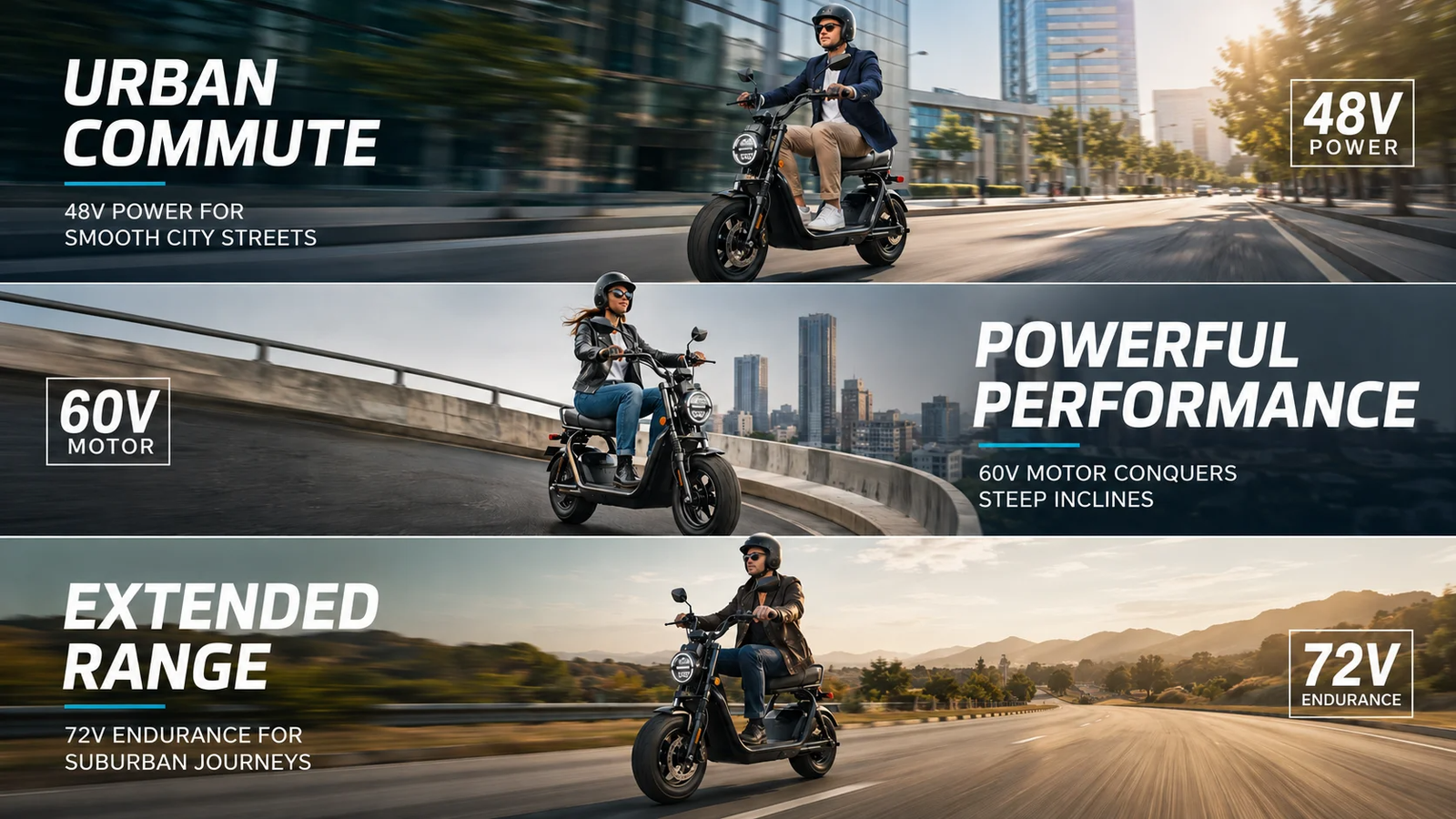
A sleek urban commuter electric bike powered by a 48V system navigating a busy European street.
60V Systems: The Sweet Spot
Balanced Performance Profile
60V systems offer compelling advantages:
Vielseitige Leistung: Good balance of speed, torque, and efficiency Reasonable Costs: Moderate premium over 48V systems Future-Proof: Adequate power for most upgrade scenarios Wide Compatibility: Good motor and component selection
60V Performance Metrics
Speed Capability: 30-45 km/h depending on motor and gearing Leistungsbereich: 750-2000W suitable for varied applications Wirkungsgrad: Peak efficiency often better than 48V or 72V systems Thermal Management: Moderate heat generation easier to manage
60V Applications
| Art der Anwendung | Suitability | Key Benefits |
|---|---|---|
| Suburban Commuting | Ausgezeichnet | Speed and range balance |
| Reiten in der Freizeit | Sehr gut | Vielseitige Leistung |
| Light Off-Road | Gut | Adequate power for trails |
| Frachttransport | Gut | Sufficient torque for loads |
| Long-Distance Touring | Ausgezeichnet | Efficiency and range |
60V System Considerations
Battery Selection:
- 16S lithium configurations common
- Good balance of capacity and voltage
- Reasonable charging times
- Moderate complexity
Controller Requirements:
- Mid-range power handling needed
- Good efficiency across operating range
- Thermal management important
- Advanced features beneficial
72V Systems: Maximum Performance
High-Performance Characteristics
72V systems deliver premium performance:
Maximum Power: 1000-3000W capability for demanding applications High Speed: 35-55 km/h top speeds possible Strong Torque: Excellent hill climbing and acceleration Professional Grade: Suitable for commercial and racing applications
72V Performance Applications
High-Speed Commuting: Highway-capable speeds where legal Off-Road Performance: Power for challenging terrain Commercial Vehicles: Delivery and service applications Racing and Competition: Maximum performance potential
72V System Requirements
Advanced Controllers:
- High-current handling capability
- Sophisticated thermal management
- Professional-grade protection features
- Intelligent power optimization
Robust Components:
- Heavy-duty wiring and connections
- High-power motor ratings
- Advanced battery management
- Professional installation recommended
72V Challenges and Solutions
| Challenge | Impact | Solution Approach |
|---|---|---|
| Higher costs | Significant budget increase | Justify with performance needs |
| Complex charging | Specialized charger required | Invest in quality charging system |
| Heat management | Thermal issues possible | Proper cooling and ventilation |
| Einhaltung der Rechtsvorschriften | Speed limit concerns | Programmable speed limiting |
| Component stress | Higher failure rates | Quality components essential |
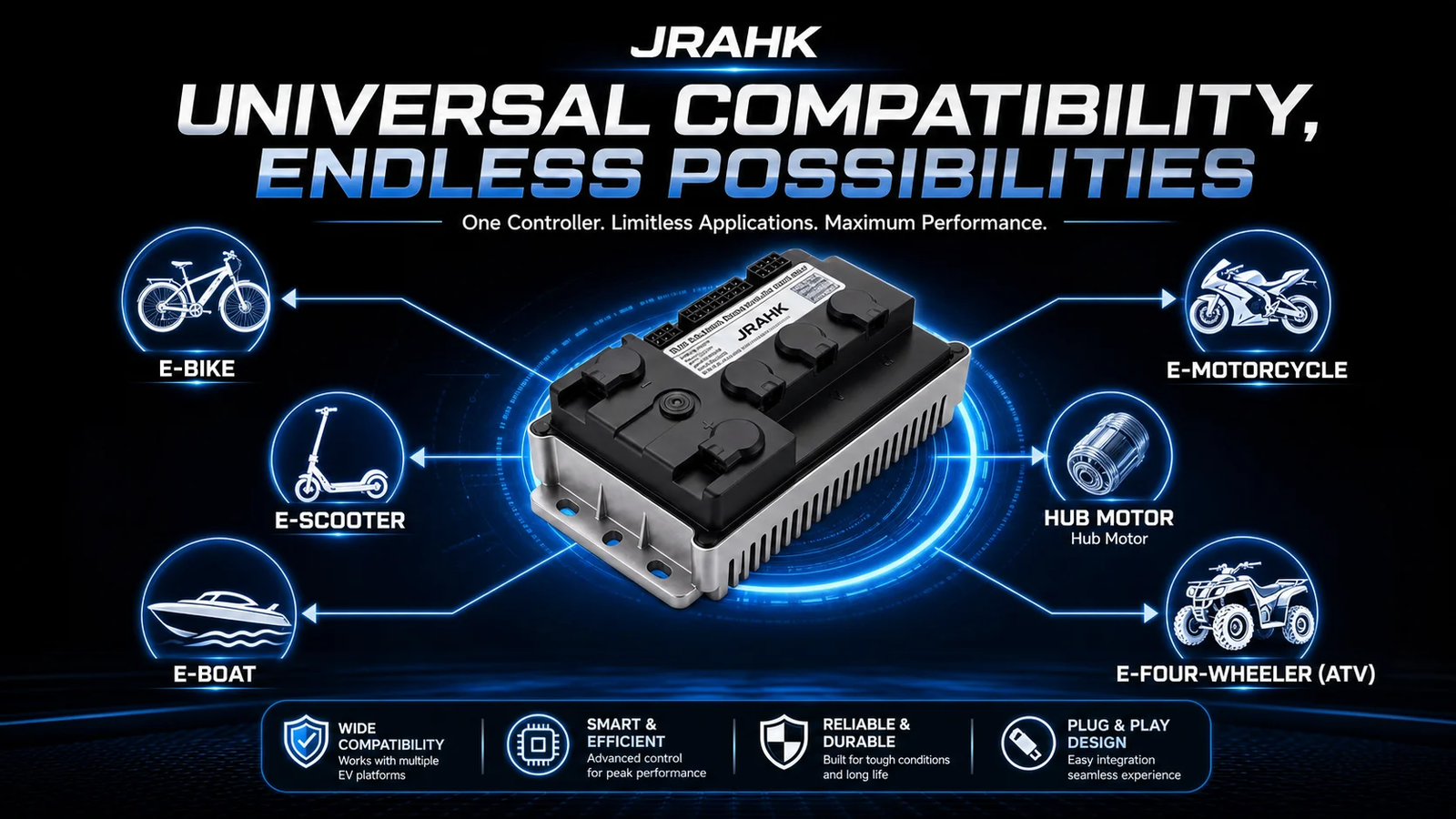
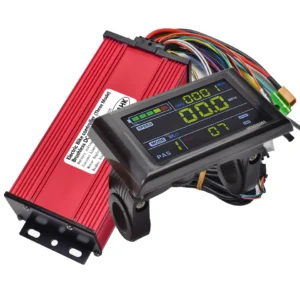
JRAHK Universal E-bike Controller: Compatible with E-bike, E-scooter, E-boat, E-motorcycle, E-four-wheeler (ATV), and various motor types (BLDC, PMSM, Hub Motor).
Selection Decision Matrix
Riding Profile Assessment
Urban Commuter (0-25 km daily):
- Recommended: 48V system
- Rationale: Cost-effective, efficient, legally compliant
- Power needs: 500-1000W adequate
Suburban/Mixed Riding (25-50 km daily):
- Recommended: 60V system
- Rationale: Versatile performance, good value
- Power needs: 750-1500W optimal
Performance/Commercial (50+ km or demanding use):
- Recommended: 72V system
- Rationale: Maximum capability, professional grade
- Power needs: 1000W+ required
Überlegungen zum Budget
| Haushaltsbereich | Recommended Voltage | Expected Performance | Upgrade Potential |
|---|---|---|---|
| Under $1000 | 48V | Good for basic needs | Begrenzt |
| $1000-1500 | 48V or 60V | Excellent versatility | Mäßig |
| $1500-2500 | 60V or 72V | High performance | Gut |
| Over $2500 | 72V | Maximum capability | Ausgezeichnet |
If you are still unsure, send us your battery voltage and motor power, and we will recommend the right controller.
Legal and Practical Factors
Speed Regulations:
- EU: 25 km/h limit favors 48V systems
- US Class 1/2: 32 km/h limit suits 48V-60V
- US Class 3: 45 km/h limit allows 60V-72V
- Off-road: No restrictions favor higher voltage
Infrastructure Compatibility:
- Charging availability
- Service and repair support
- Component replacement costs
- Insurance and registration requirements
Future-Proof Your Ride
Don’t let your controller limit your future. JRAHK controllers are built to adapt as your needs evolve.
Simplified Upgrades:
48V → 60V: Boost power by simply swapping your battery.
60V → 72V: Maximize range and performance without replacing your controller.
Our smart systems automatically adapt to any voltage in their range, ensuring a cost-effective, hassle-free transition. With JRAHK, your investment is truly future-proof.
FAQ: Quick Answers for Your Ride
Q: Is higher voltage always better?A: Not always. Higher voltage means more speed, but a 48V system is often enough for city commuting and costs much less. Match the voltage to your actual needs.
Q: Can I use a 72V battery with a 48V motor?A: Yes, but only with a JRAHK wide-voltage controller. Just be careful—higher voltage will make your motor run faster and hotter.
Q: Does higher voltage mean more range?A: No. Range depends on your battery’s Ah (capacity). Higher voltage just lets you ride faster, which might actually drain your battery quicker.
Q: Which voltage is best for hill climbing?A: 60V or 72V. They deliver more “push” (power) to the motor, making it much easier to conquer steep inclines compared to 48V.
Q: Is 72V more dangerous than 48V?A: It requires more care. While both are safe with JRAHK’s built-in protection, 72V systems need higher-quality connectors and professional installation.
Browse JRAHK Controllers
We offer a wide range of controller solutions for 48V, 60V, and 72V electric bike systems.
Not sure which controller is right for your setup? Contact us with your battery voltage, motor power, and display requirements, and our technical team will help you choose the right solution.
Schlussfolgerung
Choosing between 48V, 60V, and 72V systems requires balancing performance needs, budget constraints, and practical considerations. 48V systems offer excellent value for urban commuting and budget-conscious builds, 60V provides versatile performance for varied riding styles, and 72V delivers maximum capability for demanding applications.
The key to successful voltage selection lies in honestly assessing your actual riding requirements rather than simply choosing the highest voltage available. Consider factors like daily distance, terrain, speed requirements, and legal restrictions alongside budget and component availability.
Modern intelligent controllers with wide voltage compatibility provide flexibility to optimize your system regardless of voltage choice. Focus on selecting quality components that work well together rather than simply maximizing voltage, and you’ll achieve better performance and reliability at any voltage level.
Need help choosing the right controller?
Contact the JRAHK team with your battery voltage, motor power, and motor type. We will recommend the best controller and display combination for your project.
 English
 Spanish
 Portuguese
 French
 Russian
 Korean
 Arabic
 Italian
 German