
Definition, Types, and How Work of intelligent Controllers
1. What is an intelligent Controller?
Intelligent controller is the electronic brain of an electric bicycle, responsible for managing power delivery between the battery and motor. It interprets signals from the rider—such as throttle input or pedal assist—and regulates current, voltage, and operational behavior to control speed, torque, and overall performance. Advanced controllers also integrate intelligent functions including temperature monitoring, fault protection, regenerative braking, and customizable ride modes, ensuring a efficient, reliable, and smooth riding experience.
2.1 Tri-Mode Controllers
Automatically or manually switch between three operational modes:
①Sine Wave Mode: Delivers smooth, quiet, and highly efficient power ideal for daily commuting and noise-sensitive environments.
②Square Wave Mode: Provides strong, instantaneous torque suitable for climbing hills and heavy-load applications.
③Sensorless Mode: Serves as a backup mode in case of Hall sensor failure, ensuring riders are never stranded.
2.2 Dual-Mode Controllers
Support switching between two waveforms (e.g., Sine + Square or Sine + Sensorless), offering a balance between performance and cost. These are commonly used in mid-range e-bikes that require flexibility without full tri-mode capability.
2.3Programmable & Bluetooth-Enabled Controllers
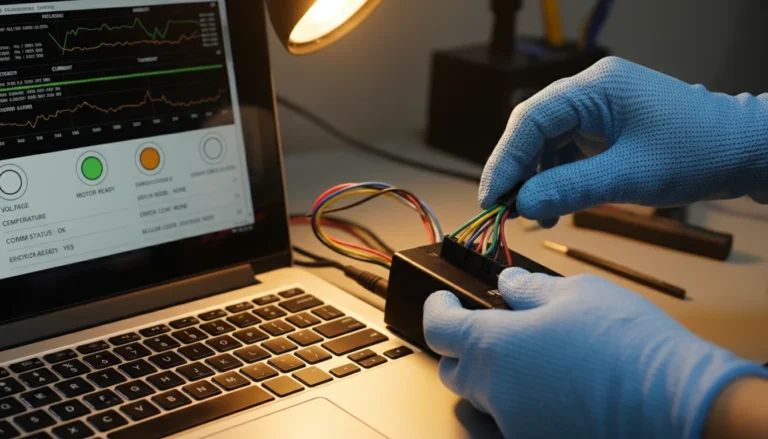
Allow users to customize parameters such as speed limits, current maximums, and pedal assist behavior via mobile app or computer software. Ideal for e-bike enthusiasts, rental fleets, and custom vehicle builders.
2.4 Voltage-Specific & Universal Controllers
Some controllers are designed for a narrow voltage range (e.g., 48V only), while universal models (e.g., 36V–84V auto-recognition) offer broad compatibility across different e-bike systems.
2.5 Custom-Built & DIY E-Bike Projects:
Often uses universal controllers with wide voltage support and flexible wiring options for compatibility with various motors and batteries.
2. Main Types of intelligent Controllers
3. How intelligent Controllers Work
3.1 Basic Operating Principle
Signal Processing: Receives input from throttle, pedal cadence, torque sensors, and brake sensors.
Power Modulation: Uses PWM (Pulse Width Modulation) to regulate power output to the motor.
Closed-Loop Control: Continuously monitors system parameters (current, voltage, temperature) and adjusts output accordingly.
Communication Interface: Manages data exchange with display units, Bluetooth modules, and other peripherals.
3.2 Key Components
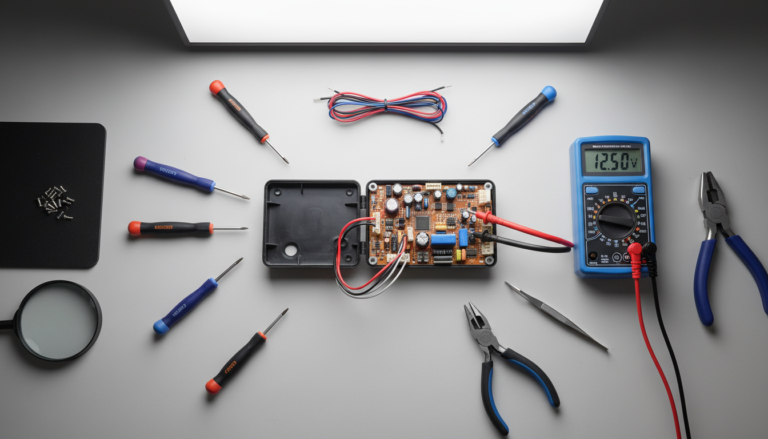
Microcontroller Unit (MCU): The central processor that executes control algorithms.
MOSFET Array: Power transistors that switch current to the motor windings.
Gate Drivers: Circuits that ensure proper switching of MOSFETs.
Voltage Regulators: Provide stable voltage to control circuitry.
Sensor Interfaces: Process signals from Hall sensors, temperature sensors, etc.
Communication Modules: Enable connectivity (UART, CAN, One-line,485 , Bluetooth).


 English
 Spanish
 Portuguese
 French
 Russian
 Korean
 Arabic
 Italian
 German